
Modern businesses rely on connected networks, cloud platforms, remote workers, applications, and digital services to operate efficiently. While this technology creates new opportunities, it also gives cybercriminals more potential ways to target organizations. Traditional security tools alone may not be enough to identify sophisticated attacks that move across different systems. Advanced threat detection and response solutions can provide businesses with greater visibility, faster investigation, and stronger protection against evolving cybersecurity risks.
Understanding Modern Threat Detection
Threat detection involves identifying suspicious activity that may indicate a cybersecurity incident. Modern solutions can analyze network traffic, user behavior, system events, endpoint activity, and other security signals.
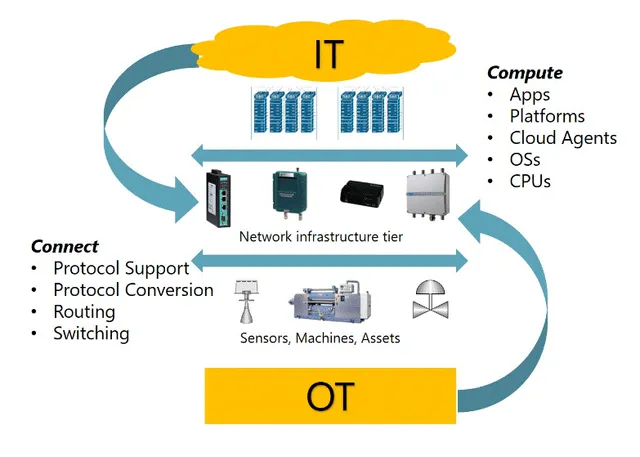
Businesses increasingly need tools that can recognize threats across both traditional IT environments and operational technology systems. what is it/ot integration is an important consideration because connecting IT and OT visibility can help organizations understand security risks across business networks and operational environments.
Why Traditional Security May Not Be Enough
Firewalls, antivirus software, and basic security controls remain important, but attackers continually develop new methods to avoid detection. Some threats may use stolen credentials, legitimate system tools, compromised accounts, or previously unknown vulnerabilities.
Advanced detection solutions can analyze multiple sources of information and identify patterns that may not be obvious when security events are viewed separately.
This broader approach can help security teams detect suspicious activity earlier and investigate potential incidents more effectively.
Protecting Complex Business Networks
Business networks are becoming increasingly complex. Organizations may operate offices, data centers, cloud platforms, remote connections, mobile devices, third-party applications, and connected equipment.
Each additional system can introduce potential security risks. Advanced threat detection can help security teams gain visibility across these environments and identify unusual communication or access patterns.
Greater visibility allows organizations to understand what is happening across their infrastructure and respond to potential problems more quickly.
Detecting Suspicious Behavior
Modern cyberattacks do not always look like traditional malware. Attackers may use legitimate credentials or normal administrative tools to move through an environment.
Behavior-based detection can help identify activity that differs from established patterns. Examples may include unusual login times, unexpected access to sensitive resources, abnormal data transfers, or communication with unfamiliar systems.
These alerts can give security teams an opportunity to investigate activity before it develops into a larger incident.
Improving Incident Response
Detecting a threat is only one part of cybersecurity. Organizations also need to respond quickly when suspicious activity is confirmed.
Advanced response capabilities can help security teams isolate affected systems, block malicious connections, disable compromised accounts, and investigate the source of an incident.
A faster response can limit an attacker's ability to move through the network and potentially reduce downtime, data exposure, and operational disruption.
Supporting IT and OT Environments
Many organizations now operate both information technology and operational technology systems. IT environments generally support business applications and data, while OT environments may control industrial equipment, production processes, and physical operations.
These environments can have different security requirements. Advanced monitoring can provide greater visibility across both areas while helping organizations understand communication between systems.
Understanding what is it/ot integration can therefore be valuable for businesses that need to connect IT and OT security strategies without unnecessarily disrupting critical operations.
Using Automation to Speed Up Security Operations
Security teams can face thousands of alerts, making manual investigation difficult. Advanced threat detection and response platforms can use automation to help prioritize events and perform predefined actions.
For example, an automated system may identify a suspicious endpoint and temporarily restrict its network access while security analysts investigate.
Automation can reduce repetitive tasks and allow security professionals to spend more time analyzing complex incidents and improving security controls.
Protecting Sensitive Business Data
Businesses store valuable information such as customer records, financial documents, intellectual property, employee information, and internal communications.
Cybercriminals may target this information for financial gain, espionage, or other purposes. Advanced detection can help identify unusual access and data movement that may indicate an attempted breach.
Combining threat detection with encryption, access controls, authentication, and data protection policies can create multiple layers of defense.
Supporting Remote and Cloud Security
Remote work and cloud services have changed how organizations access applications and information. Employees may connect from different locations and use multiple devices.
Advanced threat detection can help businesses monitor activity across remote connections and cloud environments. This visibility can help identify unusual authentication attempts, suspicious account behavior, and unexpected access.
As organizations continue adopting cloud technologies, security strategies need to evolve alongside their infrastructure.
Reducing Security Risks
No cybersecurity solution can eliminate every possible threat. However, advanced detection and response can reduce risk by improving visibility, shortening response times, and supporting better security decisions.
Organizations can also use information gathered from security incidents to identify weaknesses and improve future defenses.
Regular assessments, employee training, software updates, strong authentication, and network segmentation should complement threat detection capabilities.
Choosing the Right Solution
Businesses should consider several factors when evaluating a threat detection and response platform. These include scalability, integration capabilities, monitoring coverage, automation, reporting, ease of use, and compatibility with existing security tools.
Organizations should also consider whether the solution can support both current infrastructure and future technology investments.
A solution that provides useful visibility without creating unnecessary complexity can be more valuable than one with a large number of features that are difficult to manage.
Conclusion
Advanced threat detection and response solutions have become increasingly important as businesses adopt complex networks, cloud services, remote work, and connected operational systems. These solutions can help organizations identify suspicious behavior, investigate incidents, automate responses, and reduce the potential impact of cyberattacks.
By improving visibility across IT and OT environments, businesses can develop a more comprehensive security strategy. Understanding what is it/ot integration and incorporating appropriate monitoring and response capabilities can help organizations protect critical systems, sensitive data, and business operations in an increasingly connected digital environment.